Software Testing
Comprehensive software testing and automation services including automated testing, QA testing, performance testing, and software validation.
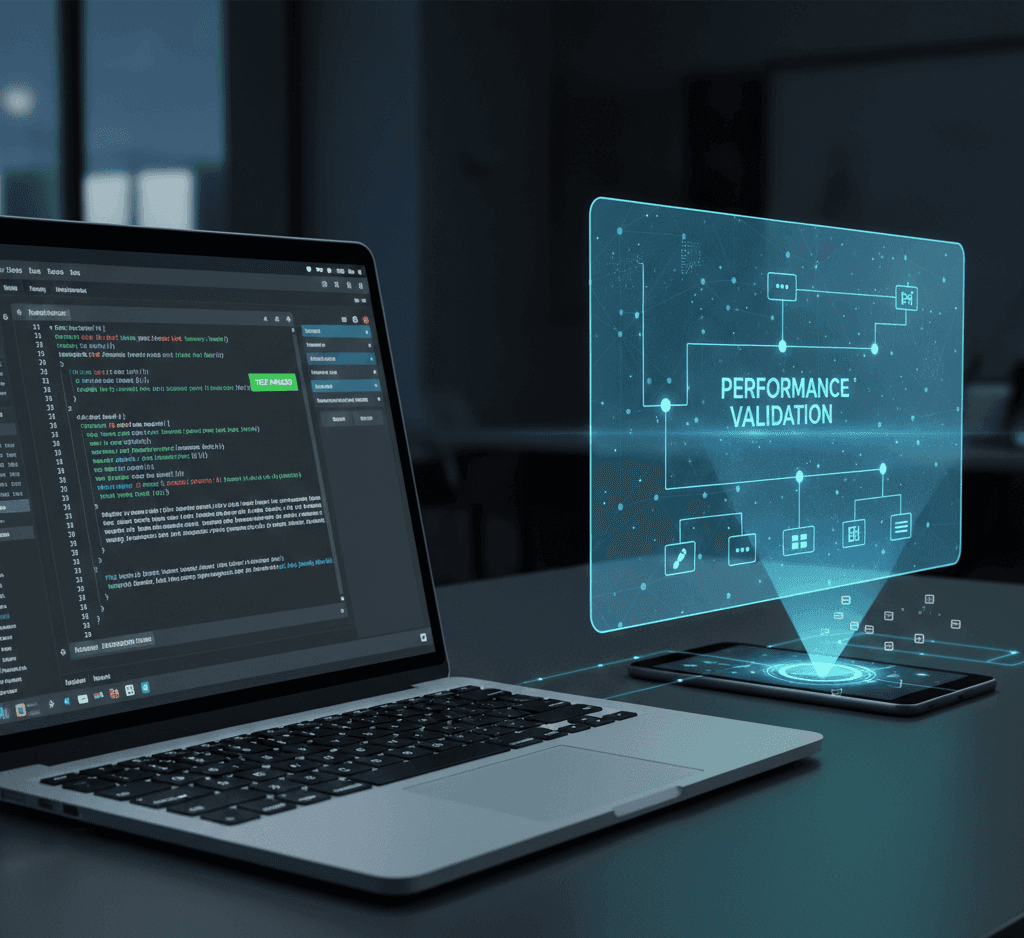
Why Software Testing and Automation Ensures Quality
Improved software quality
Faster release cycles
Reduced production bugs
Comprehensive test coverage
What Is Software Testing?
EmbedCrest Technology's software testing and automation service provides end to end quality assurance for embedded systems, custom software, web applications, mobile apps, and enterprise software. As a software development company in Mumbai offering comprehensive software development services, our QA engineers design and execute test strategies covering functional testing, automated regression suites, performance and load testing, API validation, security testing, cross device compatibility testing, and usability evaluation. We build automated test frameworks using industry standard tools and integrate them into CI/CD pipelines for continuous quality validation on every code commit. For embedded products, we perform hardware in the loop testing, firmware regression testing on target MCUs, and protocol conformance validation. Our testing methodology follows IEEE 829 and ISTQB best practices, delivering structured test plans, traceability matrices, and detailed defect reports with root cause analysis. EmbedCrest's QA team acts as an independent quality gate that catches defects early in the custom software development lifecycle, reducing production bugs, lowering warranty costs, and accelerating release cycles with confidence.
Real World Applications of Software Testing
Automated Regression Testing for Firmware Releases
Build a hardware in the loop automated test framework that validates firmware builds against 200 plus test cases on physical target boards, integrated with CI/CD pipelines to run on every merge request and produce pass-fail reports with coverage metrics.
Performance and Load Testing for IoT Cloud Backend
Design and execute load testing scenarios simulating 100,000 concurrent device connections to an MQTT broker and REST API backend, identifying throughput bottlenecks, memory leaks, and latency degradation under sustained peak loads.
Cross Platform Mobile App Testing
Execute comprehensive functional and compatibility testing across 50 plus Android and iOS device configurations for a companion mobile application, covering BLE pairing flows, data synchronization, push notifications, and offline mode behavior.
Our Software Testing and Automation Methodology
Test Planning
We establish a comprehensive roadmap that defines the overall scope, objectives, and strategy for the testing lifecycle.
Test Development
Our QA engineers design detailed automated and manual test cases covering every possible user scenario and edge case.
Execution
We put your software through rigorous validation by running test suites across target hardware and collecting performance results.
Reporting
The final step is the delivery of detailed reports and recommendations to ensure the system is optimized for its end users.
Software Testing, QA, and Automation Frameworks
Testing Services
Frequently Asked Questions About Software Testing
What is the difference between manual testing and automated testing?
Manual testing involves human testers executing test cases and verifying results, which is essential for exploratory testing, usability evaluation, and scenarios that are difficult to automate. Automated testing uses scripts and frameworks to execute repeatable test cases faster and more consistently. We recommend a hybrid approach where automation handles regression and repetitive tests while manual testing covers new features and UX validation.
How do you test embedded firmware on hardware targets?
We use hardware in the loop test setups where automated test scripts communicate with target boards via JTAG, serial, or network interfaces. We stimulate inputs using signal generators or simulated sensors, capture outputs with data acquisition hardware, and validate against expected behavior. This approach tests the actual firmware running on real hardware rather than simulators.
What test automation frameworks and tools do you use?
We use Selenium and Playwright for web application testing, Appium for mobile testing, pytest and Robot Framework for API and integration testing, and custom C based test harnesses for embedded firmware. For performance testing we use JMeter, k6, and Locust. All frameworks integrate with CI/CD systems like Jenkins, GitHub Actions, and GitLab CI.
How do you measure and report test coverage?
We track requirements coverage through traceability matrices linking every requirement to test cases. For code coverage, we use gcov and lcov for C/C++ firmware and Istanbul for JavaScript. We report statement, branch, and MC/DC coverage metrics depending on the safety integrity level required. Coverage reports are generated automatically as part of the CI/CD pipeline.
When should a project invest in automated testing versus manual testing?
Invest in automated testing when you have stable features requiring frequent regression validation, CI/CD pipelines demanding fast feedback loops, or high volume test matrices like cross device compatibility. Manual testing is more cost effective for early stage products with rapidly changing requirements, one-time exploratory testing, and usability studies requiring human judgment.
Projects Using This Service
See how we have applied software testing in real engagements.