Industrial Predictive Maintenance System with Edge AI
Discuss a Similar Engineering Problem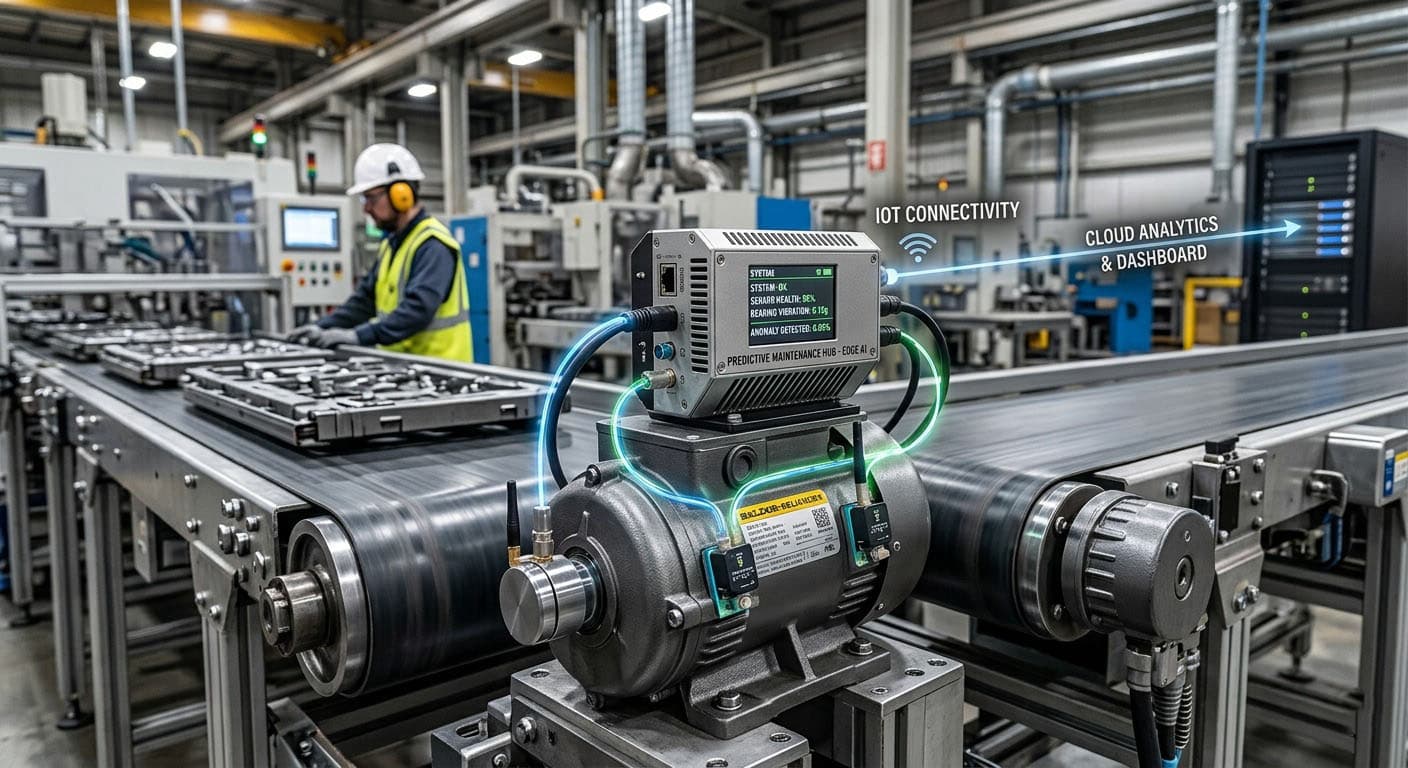
Project Overview
EmbedCrest engineered an end to end predictive maintenance platform for a heavy industry manufacturer, covering CNC machines and industrial motors across several manufacturing facilities. The solution centered on custom edge AI modules built on NVIDIA Jetson Orin Nano hardware running a Yocto based Linux distribution with a tailored BSP for industrial grade reliability. Triaxial MEMS accelerometers sampled vibration data at 25.6 kHz, which was processed through FFT based spectral analysis and a lightweight convolutional neural network trained on 18 months of historical failure patterns. The CNN classifies bearing faults, shaft misalignment and electrical imbalances so maintenance teams are alerted before failure onset. Modbus TCP integration enabled direct PLC communication for automated protective shutdowns, while Azure IoT Hub aggregated fleet wide analytics. Secure OTA firmware and model updates via SWUpdate let the system improve as new failure mode data is collected. The project was delivered by our embedded engineers in Kalyan.
Business Problem
The client operated a large fleet of CNC machines and industrial motors across several manufacturing plants in India. Unplanned equipment failures caused recurring downtime, lost production and emergency repairs. The existing vibration monitoring system generated alerts only after thresholds were breached, providing no predictive capability. The client needed an engineering partner combining edge AI with hands on manufacturing IoT experience.
Technical Constraints
- NVIDIA Jetson Orin Nano with a custom Yocto Linux BSP for industrial grade reliability
- Triaxial MEMS accelerometers and current transformers sampled at 25.6 kHz
- Non invasive clamp on sensors with no modification to existing machinery
- Modbus TCP link to PLCs for automated protective shutdowns
- MQTT telemetry to Azure IoT Hub for fleet wide analytics
- No labeled failure dataset at the start, only vibration recordings and maintenance logs
- Signed OTA model updates with rollback as new failure modes are learned
Vibration edge AI with PLC and cloud
Clamp on sensors feed edge modules that run spectral analysis and a CNN fault classifier locally, trigger PLC shutdowns over Modbus TCP when degradation is critical, and publish results to Azure IoT Hub for fleet analytics and OTA management.
Step 1
Machine sensors
Triaxial MEMS accelerometers and current transformers on motor housings, sampled at 25.6 kHz
Step 2
Edge AI module
Jetson Orin Nano on custom Yocto Linux running FFT analysis and a CNN classifier
Step 3
PLC integration
Modbus TCP link for automated machine shutdown on critical degradation patterns
Step 4
Cloud backend
MQTT to Azure IoT Hub for fleet wide analytics and device management
Step 5
OTA pipeline
Signed SWUpdate bundles for firmware and model updates with automatic rollback
What Our Team Delivered
- Developed the edge AI vibration analysis module on Jetson Orin Nano with a custom Linux BSP
- Built the Yocto based firmware image and SWUpdate OTA pipeline for signed model updates
- Labeled 18 months of vibration recordings against maintenance logs with the client's engineers
- Trained the CNN fault classifier with transfer learning and refined it through active learning
- Integrated Modbus TCP PLC communication and MQTT publishing to Azure IoT Hub
- Managed the project from Kalyan and commissioned the system on site at each facility
Engineering Approach
EmbedCrest developed a compact edge AI vibration analysis module built on the NVIDIA Jetson Orin Nano platform with a custom Linux BSP. Each module connected to triaxial MEMS accelerometers and current transformers mounted on motor housings, sampling vibration and electrical signatures at 25.6 kHz. A lightweight convolutional neural network trained on 18 months of historical failure data performed real time spectral analysis and bearing fault classification directly on the edge device, designed to flag degradation before failure. Results were published over MQTT to an Azure IoT Hub backend, while Modbus TCP integration allowed direct PLC communication for automated machine shutdown when critical degradation patterns were detected. Custom Yocto based firmware enabled secure OTA model updates as the CNN was retrained with new failure mode data. The project was managed end to end from our engineering office in Kalyan, India, with on site commissioning at each Maharashtra facility.
Phases, Testing and Handover
Data labeling and training
Historical vibration recordings were labeled against maintenance logs with the client's engineers, and transfer learning from a pre trained vibration model accelerated CNN training.
Edge platform build
The Jetson Orin Nano BSP, Yocto image, 25.6 kHz sensor acquisition and on device spectral analysis and fault classification were developed and integrated as one module.
Plant integration
Modbus TCP integration with PLCs for protective shutdowns and MQTT publishing to Azure IoT Hub were commissioned on site at each facility.
Active learning and handover
During the first three months of deployment, operator feedback refined classifications through active learning, with signed OTA model updates validated on device before installation.
Acceptance criteria
- Clamp on sensors installed with no modification to existing machinery
- Modbus TCP protective shutdowns commissioned with the PLCs on site at each facility
- Signed OTA model updates validated on device, with automatic rollback when a new model fails validation
Dependencies
- 18 months of the client's vibration recordings and maintenance logs, labeled with its maintenance engineers
- Existing PLCs supporting Modbus TCP for automated protective shutdowns
- Operator feedback during the first three months of deployment for active learning
Measured Results
Measured results are published only after the client approves the figures together with their baseline, test conditions and measurement method. Ask us about outcomes during a call.
Engineering Evidence
- System block diagram (shown on this page)
Lessons and Limitations
- Without labeled failure data, retrospective labeling against maintenance logs and operator feedback were needed to train a usable classifier.
- The model has to be retrained as new failure modes appear, so signed OTA model updates with rollback are part of the design.
Technologies Used
- NVIDIA Jetson Orin Nano
- Yocto Linux
- TensorFlow Lite
- MQTT
- Azure IoT Hub
- Modbus TCP
- MEMS accelerometers
- FFT spectral analysis
- Python
- Docker containers
- OTA (SWUpdate)
Have a similar engineering problem?
Share a short brief; an engineer replies within one business day. How engagements work
Frequently Asked Questions
How was the AI model trained without historical labeled data?
EmbedCrest worked with the client's maintenance engineers to retrospectively label 18 months of vibration recordings against maintenance logs. Transfer learning from a pre trained vibration analysis model accelerated training, and active learning was used during the first three months of deployment to refine classifications with operator feedback.
Does the system work with legacy industrial equipment?
Yes, the vibration sensors and current transformers are non invasive, clamp on devices that require no modification to existing machinery. Modbus TCP integration connects with industrial PLCs that support the protocol.
How are AI model updates deployed to edge devices?
Model updates are packaged as OTA bundles using SWUpdate and deployed through Azure IoT Hub device management. Each update is cryptographically signed and validated on device before installation, with automatic rollback if the new model fails validation checks.
Related Case Studies


Facing a Similar Engineering Problem?
Share a short brief; an engineer replies with questions, a suggested approach and next steps.
Discuss a Similar Engineering Problem