Security & R&D
Security first engineering with secure boot, encryption, QA testing, and R&D as a service.
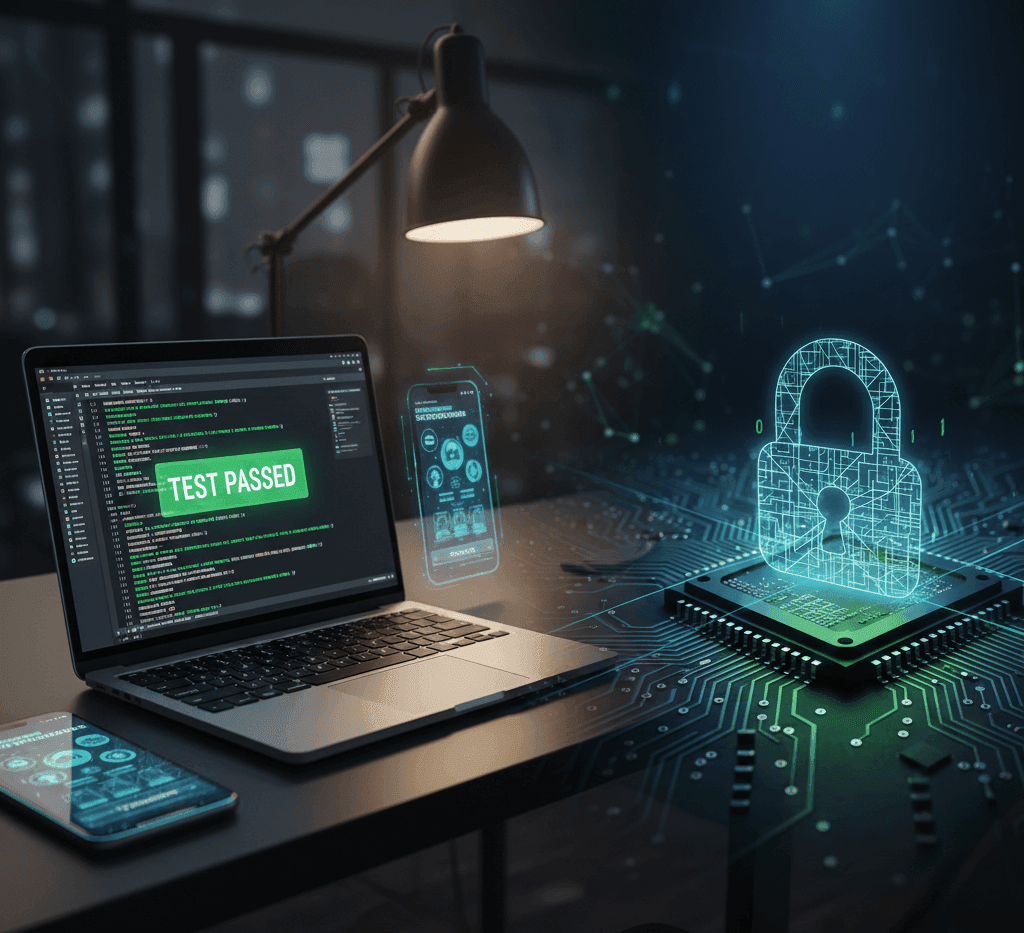
Why Security First Engineering Protects Your Product
Protection against cyber threats
Compliance with security standards
Secure firmware updates
Data encryption and privacy
What Is Security & R&D?
EmbedCrest Technology's Security and R&D service provides comprehensive embedded security engineering and applied research for connected devices and IoT products. As an embedded systems company in India with deep security expertise, we implement hardware rooted security architectures using secure boot chains, Trusted Execution Environments like ARM TrustZone and OP-TEE, Hardware Security Modules, and cryptographic co-processors. Our security engineers perform threat modeling, vulnerability assessments, and penetration testing specific to embedded systems, identifying attack surfaces ranging from JTAG debug ports to firmware binary extraction. We design secure firmware update pipelines with code signing, encrypted transport, and anti-rollback protection. On the R&D side, we conduct proof of concept development, rapid prototyping, and feasibility studies for emerging embedded technologies including energy harvesting, novel sensor fusion algorithms, and next generation communication protocols. EmbedCrest's security practice follows PSA Certified, IEC 62443, and NIST cybersecurity frameworks to deliver defense in depth strategies that protect your product throughout its operational lifetime.
Real World Applications of Security & R&D
Secure Boot and Root of Trust Implementation
Implement a hardware rooted secure boot chain on ARM TrustZone enabled processors, establishing a root of trust from ROM bootloader through kernel, verifying cryptographic signatures at each stage to prevent unauthorized firmware execution on deployed devices.
IoT Product Security Assessment and Hardening
Conduct comprehensive security assessment of a connected product including firmware binary analysis, communication protocol fuzzing, debug interface evaluation, and side channel analysis, delivering a prioritized remediation roadmap with implemented countermeasures.
Proof of Concept for Energy Harvesting Sensor Node
Research and prototype a batteryless sensor node powered by vibration energy harvesting, designing the power management circuit and ultra low duty cycle firmware that operates within microwatt harvesting budgets for infrastructure monitoring applications.
Our Embedded Security Engineering Process
Security Assessment
We conduct comprehensive evaluations to identify potential vulnerabilities and threats within your hardware and software stack.
Architecture Design
Our team focuses on designing a secure system architecture using "Security by Design" principles and multi layered defense.
Implementation
We deploy robust security measures such as advanced encryption protocols and secure communication channels.
Penetration Testing
We validate the security implementation through intensive penetration testing to identify and patch remaining weaknesses.
Embedded Security Engineering and R&D Toolkit
Technologies
Tools
R&D
Frequently Asked Questions About Security & R&D
What is a hardware root of trust and why is it important for embedded security?
A hardware root of trust is an immutable security anchor, typically in ROM or a secure element chip, that establishes the first link in a chain of trust. It verifies the bootloader signature before execution, and each subsequent software stage verifies the next. Without a hardware root of trust, attackers can replace firmware with malicious code that the device will execute without detection.
How does ARM TrustZone protect sensitive operations on embedded devices?
ARM TrustZone creates hardware enforced isolation between a Secure World and a Normal World on the same processor. Cryptographic keys, secure boot logic, and sensitive data processing run in the Secure World where they are inaccessible to Normal World software including the main OS. This prevents compromised application software from accessing security critical assets.
What types of penetration testing do you perform on embedded products?
We perform firmware binary analysis and reverse engineering, hardware attack surface evaluation including JTAG and UART probing, communication protocol fuzzing over BLE, Wi-Fi, and MQTT, side channel analysis for power and timing leakage, and physical tampering resistance evaluation. We document findings with CVSS severity ratings and provide actionable remediation guidance.
How do you secure firmware update delivery for devices in the field?
We implement end to end encrypted update delivery using TLS transport, sign firmware images with ECDSA P-256 or Ed25519 keys, store signing key references in hardware secure elements, enforce version monotonicity to prevent rollback attacks, and use A/B partition schemes for atomic fail-safe updates. The update client validates every signature before writing to flash.
What R&D services do you offer beyond security engineering?
Our R&D team conducts feasibility studies for emerging technologies, builds proof of concept prototypes for novel product ideas, performs algorithm development for sensor fusion and signal processing, and researches energy harvesting and ultra low power design techniques. We deliver documented prototypes with performance characterization and recommendations for productization.
Projects Using This Service
See how we have applied security & r&d in real engagements.


Related Articles
Read more about security & r&d and related topics.