Firmware Modernization for Legacy Industrial Systems in Maharashtra

Project Overview
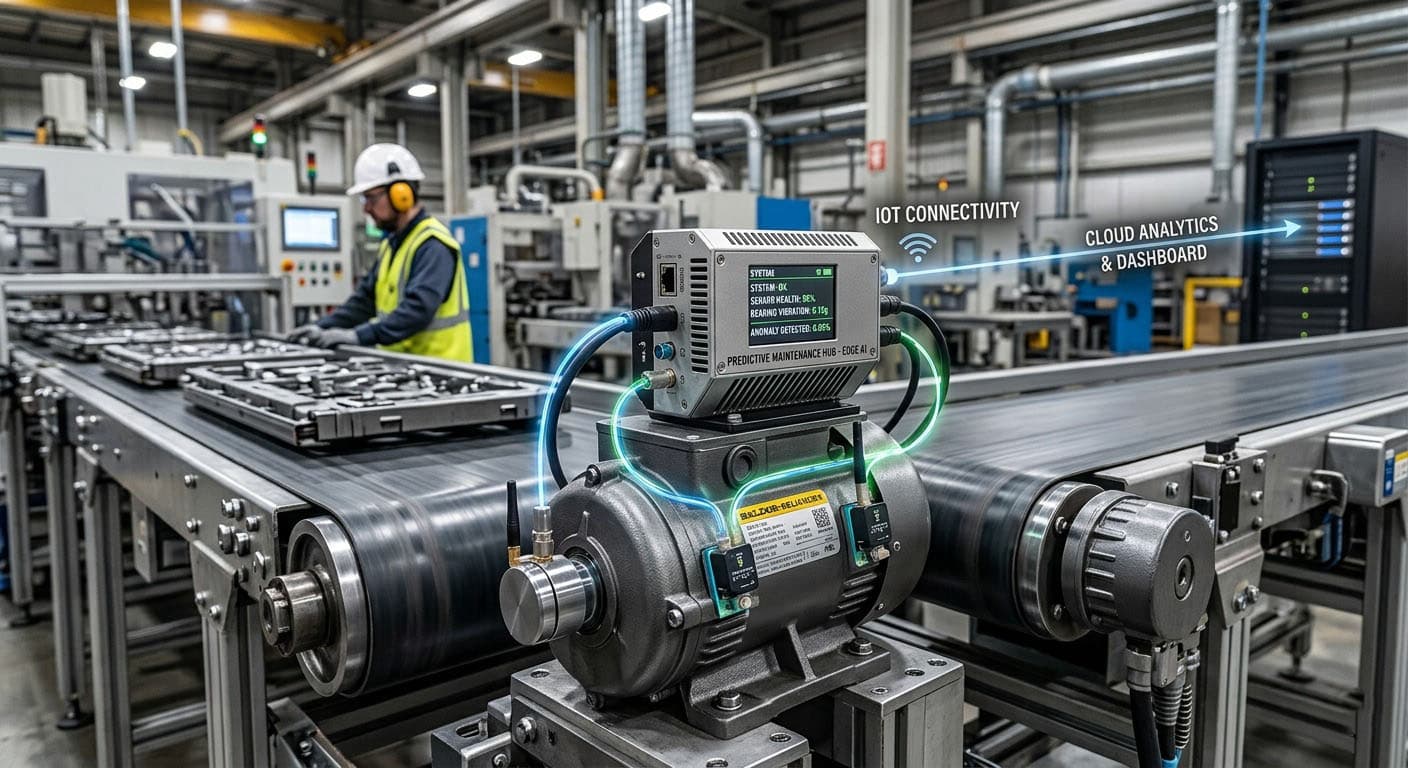
EmbedCrest, a firmware development company and embedded software development services provider based in India, partnered with Bharat Industrial Controls in Thane, Maharashtra to modernize legacy PLC firmware across 14 product variants serving over 3,000 industrial installations. This project demonstrated our core strengths in bare metal embedded programming and MCU firmware development, migrating 15-year-old PIC assembly firmware to a modern ARM Cortex-M4 platform running FreeRTOS with MISRA-C compliant code. As one of the leading embedded systems companies in India, our embedded developers reverse-engineered the undocumented legacy codebase, designed a pin-compatible hardware migration to STM32F4 microcontrollers, and implemented a comprehensive modern feature set including Modbus TCP and EtherNet/IP connectivity, IEC 61131-3 programming language support, TLS 1.3 encrypted communications, and secure OTA firmware updates. Our software testing and automation team built a hardware-in-the-loop validation framework ensuring cycle-for-cycle equivalence with the legacy firmware. The project was delivered from our engineering center in Thane with pilot validation at three industrial sites across Maharashtra, extending the product line market life by over 7 years while adding 12 new capabilities that customers had been requesting. This engagement exemplifies EmbedCrest embedded & engineering services approach to digital transformation solutions for established industrial companies in India.
Problem Statement
Bharat Industrial Controls, headquartered in Thane, Maharashtra, manufactured programmable logic controllers and industrial I/O modules used in over 3,000 process control installations across India. Their flagship PLC product line ran on legacy 8-bit PIC microcontrollers with firmware written in assembly language over 15 years ago, with no version control, no documentation, and a single retiring engineer who understood the codebase. The controllers lacked any network connectivity, modern safety features, or remote diagnostic capability. Customers in the chemical processing and water treatment sectors were increasingly demanding Ethernet connectivity, cybersecurity compliance, and remote monitoring features. Bharat faced a critical choice between developing new hardware from scratch or modernizing the firmware on their proven hardware platform to extend its market life by 5 to 7 years.
Engineering Approach
EmbedCrest, as a firmware development company with deep bare metal embedded programming expertise, undertook a comprehensive firmware modernization program for Bharat Industrial Controls. Our embedded developers first performed a complete reverse engineering of the legacy assembly codebase, producing architecture documentation, state machine diagrams, and a full I/O mapping for all 14 PLC variants. We then designed a migration path to a modern ARM Cortex-M4 based STM32F4 microcontroller, maintaining pin-compatible interface boards to preserve the existing backplane and I/O module ecosystem. The new MCU firmware development was implemented in C following MISRA-C 2012 guidelines, running on FreeRTOS with a deterministic scan cycle engine that matched the timing characteristics of the original assembly firmware within 50 microseconds. Our firmware development company team implemented IEC 61131-3 compliant ladder logic and structured text interpreters, Modbus TCP and EtherNet/IP protocol stacks for network connectivity, an embedded web server for configuration and diagnostics, TLS 1.3 encrypted communications for cybersecurity compliance, and a secure bootloader with signed firmware updates for field deployment. The software testing and automation effort included developing a hardware-in-the-loop test bench that simultaneously ran the legacy and modernized firmware against identical I/O stimulus patterns, validating cycle-for-cycle equivalence across all 14 PLC variants. Our team in Thane worked closely with Bharat field engineers to validate the modernized firmware at three customer pilot sites in Maharashtra before full production rollout.
Measurable Outcomes
14 PLC variants
Firmware migration coverage
100%
Legacy feature parity
12 capabilities
New feature additions
7+ years
Product life extension
Technologies Used
“EmbedCrest took our 15-year-old firmware written in assembly by one engineer and turned it into a modern, maintainable, connected platform without breaking a single customer installation. Their reverse engineering of the legacy code was meticulous, and the hardware-in-the-loop validation gave us confidence to deploy to critical process control sites. Our product line now has a future for another decade.”
Suresh Bhagwat
Managing Director, Bharat Industrial Controls
Note: Client details have been anonymized to protect confidentiality. Project outcomes and technical specifications are representative of actual engagements.
Frequently Asked Questions
How was the legacy assembly firmware reverse engineered without documentation?
Our embedded developers used a systematic approach combining static analysis of the PIC assembly binary with dynamic tracing using logic analyzers and protocol decoders on all I/O pins. We instrumented the legacy hardware with bus probes to capture real time state transitions during normal operation and fault conditions. The reverse engineering produced 1,400 pages of documentation including state machine diagrams, timing specifications, I/O truth tables, and protocol message formats for all 14 PLC variants. This documentation alone became a valuable asset for Bharat Industrial Controls.
How was backward compatibility maintained with existing customer installations?
The STM32F4 migration boards maintain identical pinout and electrical characteristics to the original PIC boards, allowing direct replacement in existing backplanes. The FreeRTOS based scan cycle engine was tuned to match the original firmware timing within 50 microseconds, ensuring all ladder logic programs execute identically. Modbus RTU serial communication, which existing SCADA systems rely on, was preserved alongside the new Modbus TCP capability. Every PLC variant underwent 500 hours of parallel operation testing against the legacy firmware before customer deployment.
What cybersecurity features were added during modernization?
The modernized firmware implements TLS 1.3 for all Ethernet communications, a hardware-backed secure bootloader using STM32 cryptographic accelerator for signed firmware verification, role-based access control for the embedded web interface, encrypted credential storage in STM32 option bytes, and network segmentation support through configurable firewall rules. These features align with IEC 62443 industrial cybersecurity guidelines and meet the requirements Bharat customers in chemical processing were facing from regulatory audits.
Can the modernized platform support future product enhancements?
Absolutely. The ARM Cortex-M4 running at 168 MHz provides over 10x the processing headroom compared to the original 8-bit PIC. The FreeRTOS architecture supports addition of new protocol stacks, communication interfaces, and control algorithms as modular software components. Bharat Industrial Controls is already planning additions including MQTT for cloud connectivity, OPC-UA server capability, and integration with their planned cloud monitoring platform, all of which can be deployed as OTA firmware updates to already installed units.