Smart Manufacturing IoT Platform for an Auto Parts Maker
Discuss a Similar Engineering Problem
Project Overview
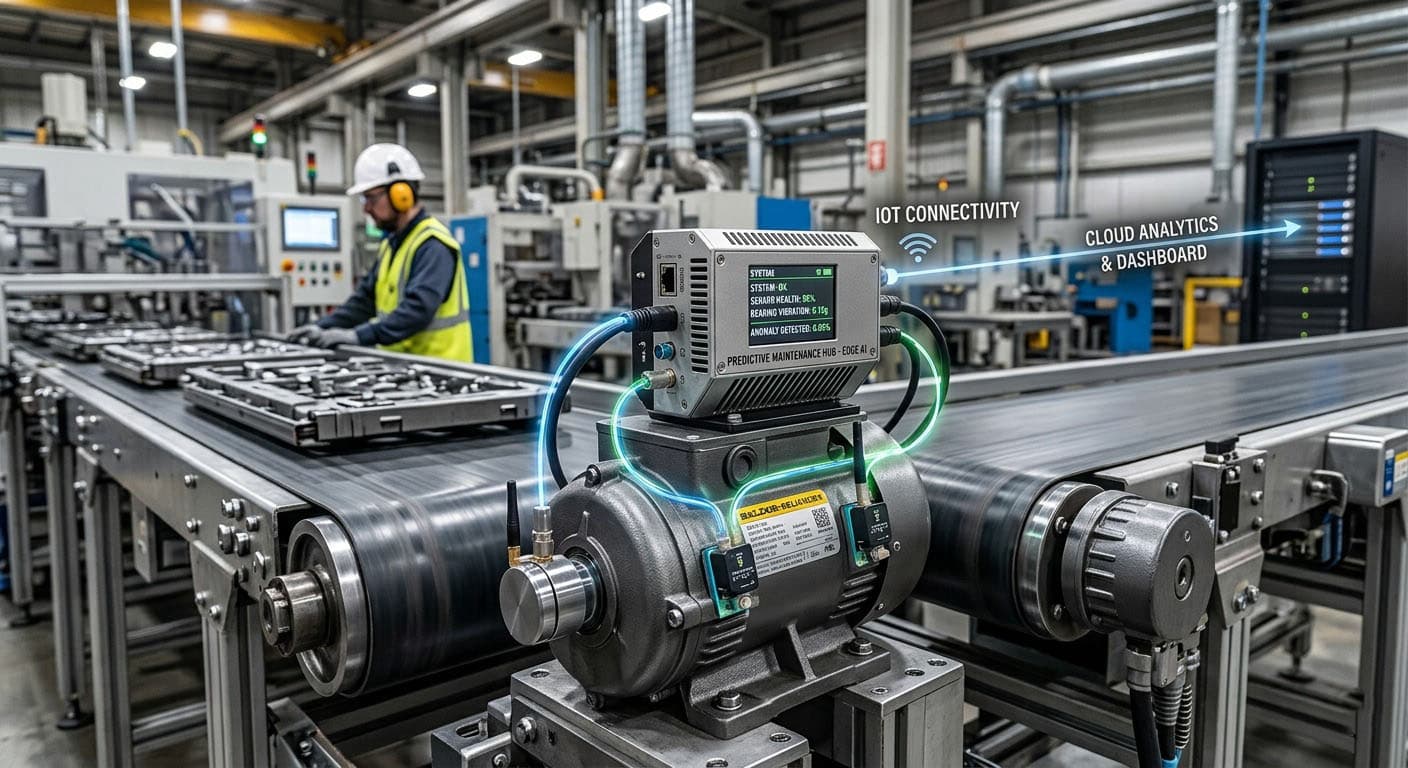
EmbedCrest worked with a mid size automotive parts manufacturer to connect CNC machines and robotic welding cells to a smart factory platform. Our embedded team designed custom edge computing nodes on STM32H7 microcontrollers running FreeRTOS, interfacing with legacy CNC controllers from Fanuc, Siemens and Mitsubishi through OPC UA and Modbus RTU protocols. Each edge node runs TinyML models for real time anomaly detection, designed to surface quality deviations and equipment degradation patterns before they reach final inspection. The platform aggregates telemetry through on premises gateways running on Raspberry Pi CM4 clusters, feeding AWS IoT Greengrass for cloud based predictive analytics and production dashboards. EmbedCrest delivered the solution from our engineering office in Kalyan, including on site commissioning, operator training and ongoing optimization support.
Business Problem
The client, a mid size automotive parts manufacturer, operated a large fleet of CNC machines and robotic welding cells across two factory floors. Its legacy SCADA system provided only basic machine status monitoring with no real time production analytics. Manual data collection and paper based quality logs meant defects were often caught only at final inspection, leading to scrap and order delays. The client needed to modernize shop floor operations without replacing existing machinery.
Technical Constraints
- STM32H7 Cortex M7 at 480 MHz on FreeRTOS, with a TinyML model designed to stay under 200 KB of RAM
- Fanuc FOCAS, Siemens SINUMERIK OPC UA, Mitsubishi SLMP and Modbus RTU controller interfaces
- Spindle load, vibration, coolant temperature and cycle time sampled at 1 kHz
- Existing machinery kept in place, with retrofit sensor kits for machines lacking digital interfaces
- Industrial WiFi 6 backhaul with a LoRa failover link for critical anomaly alerts
- 2 MB of local flash designed to buffer up to 48 hours of telemetry during outages
- Legacy SCADA system offering only basic machine status monitoring
Edge nodes, plant gateway and cloud analytics
STM32H7 edge nodes read CNC controllers and sensors, run TinyML anomaly detection locally and send telemetry over industrial WiFi 6 to an on premises Raspberry Pi CM4 gateway cluster that feeds AWS IoT Greengrass and production dashboards.
Step 1
Machine interfaces
Custom drivers for Fanuc, Siemens and Mitsubishi controllers plus retrofit sensor kits
Step 2
Edge nodes
STM32H7 on FreeRTOS sampling at 1 kHz with TinyML anomaly detection
Step 3
Plant network
Industrial WiFi 6 mesh with a secondary LoRa link for critical alerts
Step 4
On premises gateway
Raspberry Pi CM4 cluster aggregating and normalizing telemetry from all machines
Step 5
Cloud analytics
AWS IoT Greengrass for fleet management, OTA updates and cross plant analytics
Step 6
Production dashboards
Real time OEE, cycle time variance and quality trends per machine, shift and product line
What Our Team Delivered
- Designed STM32H7 edge node hardware and FreeRTOS firmware
- Wrote custom device drivers for Fanuc, Siemens and Mitsubishi CNC controllers
- Developed the TinyML anomaly detection model and its per machine baseline process
- Built the gateway aggregation software and AWS IoT Greengrass integration
- Built real time dashboards for OEE, cycle time variance and quality trends
- Validated every protocol integration against real production data
- Provided on site commissioning, operator training and ongoing optimization support
Engineering Approach
EmbedCrest delivered a full stack manufacturing IoT platform built on custom embedded hardware and cloud analytics. Our embedded developers designed compact edge nodes based on STM32H7 microcontrollers running FreeRTOS, each interfacing with existing CNC controllers via OPC UA and Modbus RTU protocols. The edge nodes sampled spindle load, vibration, coolant temperature and cycle time data at 1 kHz resolution, performing local feature extraction and anomaly detection using a lightweight TinyML model deployed with TensorFlow Lite Micro. A mesh of industrial WiFi 6 access points backhauled data to an on premises gateway running our custom aggregation software on a Raspberry Pi CM4 cluster, which aggregated and normalized telemetry from all machines before pushing it to AWS IoT Greengrass for cloud analytics. Our analytics engineers built real time dashboards showing OEE, cycle time variance and quality trends per machine, shift and product line. The embedded software work included custom device drivers for interfacing with Fanuc, Siemens and Mitsubishi CNC controllers, covering the client's existing installed base. Our test engineers validated every protocol integration against real production data, with zero tolerance for data loss or latency spikes that could affect production decisions.
Phases, Testing and Handover
Controller interface development
Custom drivers for Fanuc FOCAS, Siemens SINUMERIK OPC UA and Mitsubishi SLMP were built and unified into one telemetry schema so analytics work the same for every machine brand.
Edge model baselining
Each machine type ran a two week baseline period on healthy operation data to train the variational autoencoder used for anomaly detection on the edge nodes.
Gateway and cloud integration
The Raspberry Pi CM4 gateway cluster, store and forward buffering, LoRa alert failover and the AWS IoT Greengrass analytics pipeline were integrated end to end.
Validation and commissioning
Every protocol integration was validated against real production data with zero tolerance for data loss or latency spikes, followed by on site commissioning and operator training.
Acceptance criteria
- Every protocol integration validated against real production data with zero tolerance for data loss or latency spikes
- One unified telemetry schema so analytics work the same for Fanuc, Siemens and Mitsubishi controllers
- Monitoring of existing machinery without replacement, using retrofit sensor kits where digital interfaces were missing
Dependencies
- Existing Fanuc, Siemens and Mitsubishi CNC controllers across the client's two factory floors
- Two weeks of healthy operation data per machine type for anomaly model baselining
- AWS IoT Greengrass for fleet management, OTA updates and cross plant analytics
Measured Results
Measured results are published only after the client approves the figures together with their baseline, test conditions and measurement method. Ask us about outcomes during a call.
Engineering Evidence
- System block diagram (shown on this page)
Lessons, Limitations and Next Phase
- Older machines without digital interfaces needed retrofit sensor kits to reach equivalent monitoring.
- Anomaly models are machine specific, so each new machine type needs its own baseline period before deployment.
Next phase
The client planned to extend the same platform to a further facility.
Technologies Used
- STM32H7
- FreeRTOS
- OPC UA
- Modbus RTU
- TensorFlow Lite Micro
- AWS IoT Greengrass
- Raspberry Pi CM4
- Industrial WiFi 6
- Python
- React (dashboards)
- PostgreSQL
- Docker
Have a similar engineering problem?
Share a short brief; an engineer replies within one business day. How engagements work
Frequently Asked Questions
How does the system integrate with legacy CNC controllers from different manufacturers?
Our embedded software team built custom device drivers for Fanuc FOCAS, Siemens SINUMERIK OPC UA and Mitsubishi SLMP protocols. Each driver abstracts manufacturer specific data formats into a unified telemetry schema, allowing the analytics layer to work identically regardless of machine brand. For older machines without digital interfaces, we deployed retrofit sensor kits with current transformers and vibration sensors that provide equivalent monitoring capability.
What happens if the network connection between edge nodes and the gateway fails?
Each STM32H7 edge node has 2 MB of onboard flash configured as a circular buffer, designed to store up to 48 hours of compressed telemetry data locally. When connectivity is restored, the node performs a synchronized bulk upload with deduplication. Critical anomaly alerts use a secondary LoRa radio link to the gateway as a failover path for safety critical notifications.
How was the TinyML model trained for anomaly detection across different machine types?
We used a semi supervised approach with a variational autoencoder trained on healthy operation data from each machine type during a two week baseline period. The model learns the normal vibration and electrical signature patterns for each specific machine and flags deviations that exceed learned boundaries. Transfer learning is intended to shorten deployment to new machine types to three to five days of baseline data. The model runs entirely on the STM32H7 Cortex M7 core at 480 MHz, with a design budget under 200 KB of RAM.
Can the platform scale to additional factory locations?
Yes, the architecture is designed for multi site deployment. Each factory runs its own on premises gateway cluster for low latency local processing, while AWS IoT Greengrass provides centralized fleet management, OTA firmware updates and cross plant analytics. The client planned to extend the platform to a third facility near Chakan, Pune.
Related Case Studies

Facing a Similar Engineering Problem?
Share a short brief; an engineer replies with questions, a suggested approach and next steps.
Discuss a Similar Engineering Problem