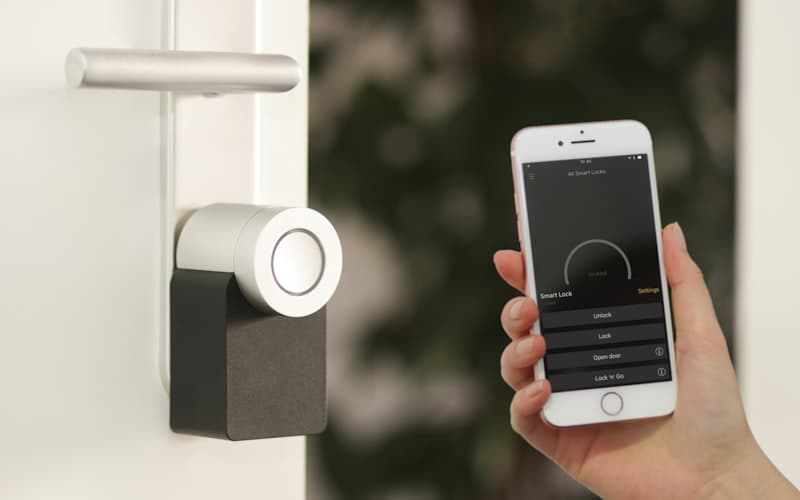
Matter is an open-source, royalty-free connectivity standard developed by the Connectivity Standards Alliance (CSA) that aims to unify the fragmented smart home ecosystem by enabling interoperability across manufacturers and platforms. Built on Internet Protocol (IP), Matter runs over Wi-Fi, Thread, and Ethernet as transport layers, allowing devices from Apple HomeKit, Google Home, Amazon Alexa, and Samsung SmartThings to communicate seamlessly through a single protocol. Unlike proprietary alternatives such as Zigbee or Z-Wave, Matter uses standard IP networking, making it accessible to developers familiar with TCP/UDP. The specification defines device types (lights, locks, thermostats, sensors), data models, security requirements (including device attestation certificates from a distributed compliance ledger), and commissioning flows using Bluetooth Low Energy for initial setup. Matter 1.0 launched in October 2022, with subsequent releases adding support for appliances, energy management, cameras, and robot vacuums.
How Does Matter Work Under the Hood?
Matter uses a layered architecture. At the application layer, devices expose clusters, collections of attributes, commands, and events that define device functionality. For example, a smart light exposes an OnOff cluster and a LevelControl cluster for dimming. The interaction model defines how controllers read, write, subscribe to, and invoke these clusters. Below the application layer, the Message Layer handles reliable message delivery, encryption (using CASE, Certificate Authenticated Session Establishment), and session management. Matter supports multiple fabric membership, meaning a single device can be controlled by multiple ecosystems simultaneously without factory reset.
Why Is Thread Important for Matter?
Thread is a low-power, mesh networking protocol based on IEEE 802.15.4 radio that serves as one of Matter's primary transport layers for battery-powered and always-on devices. Thread creates a self-healing mesh network where devices act as routers, extending coverage throughout a building. A Thread Border Router (typically built into a smart speaker or hub) bridges the Thread mesh to the IP network, allowing Thread devices to communicate with Wi-Fi and cloud services. Thread's advantages over Zigbee include native IPv6 addressing (no translation gateway needed), self-forming mesh topology, and standardized border router functionality. Combined with Matter, Thread eliminates the need for proprietary hubs while providing reliable, low-latency communication for sensors, switches, and locks.
What Hardware Do You Need to Build a Matter Device?
Common platforms for Matter development:
- Nordic nRF52840/nRF5340: Thread + BLE, widely used for Matter over Thread devices. Excellent SDK support.
- Espressif ESP32-C3/C6/H2: Wi-Fi and/or Thread support, low cost, strong community. ESP32-H2 adds 802.15.4 radio.
- Silicon Labs EFR32MG24: Thread + BLE with hardware security, well-suited for commercial Matter products.
- NXP RW612: Tri-radio SoC supporting Wi-Fi 6, BLE 5.3, and 802.15.4 for versatile Matter device development.
- Texas Instruments CC2652R7: Thread + BLE with ultra-low power consumption, ideal for battery-operated Matter devices.
What Are the Limitations of Matter Today?
Despite its promise, Matter has limitations that developers should consider. The device type coverage is still growing, cameras, robot vacuums, and complex appliances gained support only in Matter 1.3 and 1.4. Thread Border Router availability varies by ecosystem. The commissioning process, while standardized, can feel slow compared to proprietary alternatives due to the multi-step cryptographic verification. Device attestation requires obtaining certificates from the Distributed Compliance Ledger (DCL), adding manufacturing complexity. Bridging legacy Zigbee and Z-Wave devices to Matter is possible but requires gateway devices with translation logic. Despite these challenges, Matter adoption is accelerating, with over 2,800 certified devices as of early 2026.
Key takeaway: Matter is an IP-based, open-source smart home standard enabling interoperability across Apple, Google, Amazon, and Samsung ecosystems. Running over Wi-Fi, Thread, and Ethernet, Matter defines standardized device types, data models, and security with device attestation certificates, requiring approximately 512 KB flash and 128 KB RAM on supported SoCs like nRF52840, ESP32-C6, and EFR32MG24.
What Was Our Experience Building a Matter-Certified Product?
At EmbedCrest, we developed a Matter-over-Thread smart sensor for an HVAC company that needed temperature, humidity, and air quality readings integrated into Apple Home, Google Home, and Amazon Alexa simultaneously. We used the Nordic nRF5340 SoC with the nRF Connect SDK (Zephyr + OpenThread + Matter SDK). The firmware implemented Temperature Measurement, Relative Humidity Measurement, and Air Quality clusters on three separate endpoints. Total flash usage was 548 KB including MCUboot, OpenThread, BLE commissioning stack, and the Matter application layer. RAM usage peaked at 156 KB during BLE commissioning. The most challenging aspect was the certification process: Matter certification through the CSA took 4 months including interoperability testing across 8 different controller platforms, security assessment of our DAC provisioning infrastructure, and compliance testing at an authorized test lab. Multi-admin commissioning worked flawlessly, allowing the same physical sensor to report to Apple Home and Google Home simultaneously through separate Matter fabric memberships.
What Are the Common Pitfalls in Matter Device Development?
Matter development presents several non-obvious challenges. The Matter SDK (connectedhomeip) is large and evolves rapidly, with breaking API changes between releases. Pin your SDK version early and budget time for SDK upgrades. Device Attestation Certificate provisioning requires establishing a PKI relationship with the CSA Distributed Compliance Ledger, which takes 4-6 weeks for initial setup and adds per-device manufacturing cost of $0.10-0.50 for certificate provisioning. Thread Border Router availability varies across ecosystems: Apple requires an Apple TV or HomePod, Google requires a Nest Hub, and Amazon requires a recent Echo device with Thread radio. Test your device against all target ecosystems early, as subtle differences in commissioning flow implementations cause interoperability failures. Battery-powered Matter devices must use Thread Sleepy End Device mode with carefully tuned polling intervals (500ms-5s) to balance responsiveness with battery life. Over-aggressive polling drains batteries in months rather than years.
How Does Matter Security Compare to Legacy Protocols?
Matter provides significantly stronger security than Zigbee or Z-Wave. Every Matter device carries a unique Device Attestation Certificate (DAC) issued by a certified Product Attestation Authority (PAA), verified during commissioning against the Distributed Compliance Ledger. Communication uses CASE (Certificate Authenticated Session Establishment) with AES-128-CCM encryption and per-session keys derived from ECDH key exchange. Zigbee, by contrast, uses a single network-wide AES-128 key (the Trust Center link key) that, if compromised, exposes all devices on the network. Z-Wave S2 improved security with per-device ECDH key exchange but lacks the certificate-based device attestation that Matter provides. Matter also mandates secure commissioning via BLE with SPAKE2+ password-authenticated key exchange, preventing unauthorized device addition. For enterprise and commercial deployments where security is non-negotiable, Matter's certificate-based identity model represents a fundamental advancement over previous smart home protocols.