Choosing the right communication protocol is one of the most critical decisions in any IoT project, as it directly impacts range, power consumption, data throughput, latency, and total cost of ownership. Bluetooth Low Energy (BLE) is ideal for short-range, low-power applications like wearables and smart home devices, offering data rates of 1-2 Mbps within a 100-meter range while consuming microwatts in sleep mode. LoRaWAN excels in long-range, low-bandwidth scenarios such as smart agriculture and utility metering, reaching 10-15 km in rural areas with multi-year battery life. NB-IoT is a cellular LPWAN technology providing reliable coverage in deep indoor and underground environments with carrier-grade security. Wi-Fi remains the protocol of choice for high-bandwidth applications requiring continuous data streaming, though at the cost of higher power consumption. The optimal choice depends on your specific requirements for range, battery life, data rate, deployment density, and infrastructure availability.
How Does BLE Work for IoT Applications?
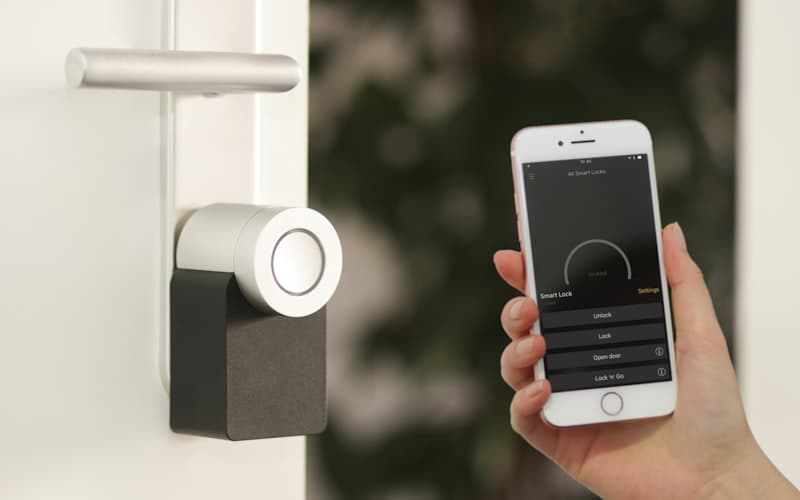
Bluetooth Low Energy (BLE 5.0+) operates in the 2.4 GHz ISM band and is designed for intermittent data transfer with extremely low power consumption. BLE uses a connection-oriented model with GATT (Generic Attribute Profile) for structured data exchange, and BLE 5.0 introduced advertising extensions enabling connectionless broadcasting. Key features include 2 Mbps PHY for faster data transfer, long-range coded PHY extending range to 400+ meters line of sight, and periodic advertising for beacon-like use cases. BLE Mesh enables many-to-many communication for building automation and lighting control. Common IoT applications include health monitors, proximity sensors, asset trackers, and smart locks.
When Should You Choose LoRaWAN for Your IoT Deployment?
LoRaWAN (Long Range Wide Area Network) is a MAC-layer protocol built on top of Semtech's LoRa modulation technology, operating in sub-GHz ISM bands (868 MHz in Europe, 915 MHz in North America). It employs chirp spread spectrum modulation to achieve extraordinary link budget of 157 dB, enabling communication distances of 5-15 km in urban environments and up to 40 km in rural line-of-sight conditions. LoRaWAN supports three device classes: Class A (lowest power, uplink-initiated), Class B (scheduled receive windows), and Class C (continuous listening). Typical data rates range from 0.3 to 27 kbps, making it suitable for periodic sensor readings but not for streaming or real-time control applications.
What Makes NB-IoT Different from LoRaWAN?
NB-IoT (Narrowband Internet of Things) is a 3GPP cellular standard operating in licensed spectrum, providing several key advantages over LoRaWAN. It offers guaranteed quality of service (QoS), carrier-grade security through SIM-based authentication, and leverages existing cellular infrastructure. NB-IoT supports peak data rates of 127 kbps downlink and 159 kbps uplink, with latency as low as 1.6 seconds. Its power saving mode (PSM) and extended discontinuous reception (eDRX) enable 10+ year battery life. The main trade-off is the recurring cost of cellular subscriptions and the requirement for operator coverage.
How Do You Compare All Four Protocols?
Key comparison across critical parameters:
- Range: BLE (10-400m) < Wi-Fi (50-100m) < NB-IoT (1-10km) < LoRaWAN (5-40km)
- Power: BLE (~15mA TX) and LoRaWAN (~40mA TX) are lowest; Wi-Fi (~200-300mA TX) is highest
- Data Rate: Wi-Fi (150-600 Mbps) >> BLE (1-2 Mbps) >> NB-IoT (127 kbps) > LoRaWAN (0.3-27 kbps)
- Latency: Wi-Fi and BLE offer sub-10ms latency; LoRaWAN and NB-IoT have seconds-level latency
- Cost: BLE and Wi-Fi modules cost $1-5; LoRaWAN modules $5-15; NB-IoT modules $5-10 plus subscription fees
- Infrastructure: Wi-Fi and BLE use local infrastructure; LoRaWAN requires gateways; NB-IoT uses existing cellular towers
What Is the Best Protocol for Your Application?
For wearables and consumer devices with smartphones as hubs, BLE is the clear winner. For smart agriculture, utility metering, and environmental monitoring where devices are distributed over large areas, LoRaWAN provides the best range-to-power ratio. NB-IoT is optimal for critical infrastructure monitoring, smart city applications, and deployments requiring carrier-grade reliability. Wi-Fi suits home automation, video surveillance, and any application needing high throughput. Many production IoT systems combine multiple protocols, for example, BLE for local device management and LoRaWAN for long-range data backhaul.
Key takeaway: Select your IoT protocol based on four primary constraints: range (BLE for 10-400m, LoRaWAN for 5-40km), power budget (BLE and LoRaWAN achieve multi-year battery life, Wi-Fi requires mains power), data rate (Wi-Fi for streaming, LoRaWAN for periodic telemetry), and infrastructure cost (BLE and Wi-Fi leverage existing infrastructure, LoRaWAN requires gateways, NB-IoT requires cellular subscriptions).
How Did We Deploy a Multi-Protocol IoT Network in Practice?
In a recent project, our team at EmbedCrest designed a cold chain monitoring system for a pharmaceutical logistics company tracking temperature-sensitive vaccines across warehouse-to-delivery routes. We deployed a multi-protocol architecture: BLE 5.0 beacons (nRF52840-based) inside insulated containers broadcasting temperature readings every 30 seconds, LoRaWAN gateways (RAK7268) at warehouses collecting BLE data via custom firmware that bridged BLE advertisements to LoRaWAN uplinks, and NB-IoT modules (Quectel BC66) on delivery vehicles for continuous cellular connectivity during transit. The BLE nodes achieved 14-month battery life on CR2477 coin cells by using non-connectable extended advertising with minimal 20-byte payloads. The LoRaWAN gateway aggregated readings from up to 200 BLE nodes within a 50-meter warehouse radius and forwarded hourly summaries to AWS IoT Core. During transit, NB-IoT provided GPS-tagged temperature readings every 5 minutes with guaranteed delivery via MQTT QoS 1. This hybrid approach cost 60% less than a pure cellular solution while providing better indoor coverage through LoRaWAN.
What Are the Common Pitfalls in Protocol Selection?
Teams frequently make three critical mistakes when selecting IoT protocols. First, choosing Wi-Fi for battery-powered devices because it is familiar. Wi-Fi idle current on ESP32 (20-80 mA with modem sleep) drains a 2000 mAh battery in days, while BLE sleep current (1-3 uA) extends life to years. Second, selecting LoRaWAN without understanding regional duty cycle regulations: in EU868, the 1% duty cycle limits uplinks to approximately 30 seconds of airtime per hour at SF12, restricting you to a few hundred bytes per hour. Third, underestimating NB-IoT latency: PSM (Power Saving Mode) can introduce 20-40 second delays on initial uplink after sleep, making NB-IoT unsuitable for time-sensitive alerts. Always prototype with actual hardware in your target deployment environment before committing. RF propagation in industrial facilities with metal structures differs dramatically from lab testing, often reducing LoRaWAN range from the theoretical 10 km to 200-500 meters indoors.
How Do Total Cost of Ownership Numbers Compare?
A 5-year total cost of ownership (TCO) analysis reveals surprising differences. For a 1,000-node deployment with hourly data reporting: BLE mesh with a gateway requires approximately $5 per node hardware, $500 for gateway infrastructure, and minimal ongoing costs, totaling roughly $6,000. LoRaWAN costs approximately $10 per node, $2,000 for gateway infrastructure, and $500 per year for network server hosting, totaling roughly $14,500. NB-IoT costs approximately $8 per node module, plus $1-3 per SIM per month subscription, totaling $68,000 over 5 years. Wi-Fi costs approximately $3 per node module, but requires existing Wi-Fi infrastructure with adequate density, and electricity costs for always-on nodes add up. The cheapest option per unit data point varies: BLE wins for dense, short-range deployments; LoRaWAN wins for sparse, long-range deployments; NB-IoT wins when you need guaranteed carrier-grade coverage without deploying your own infrastructure.