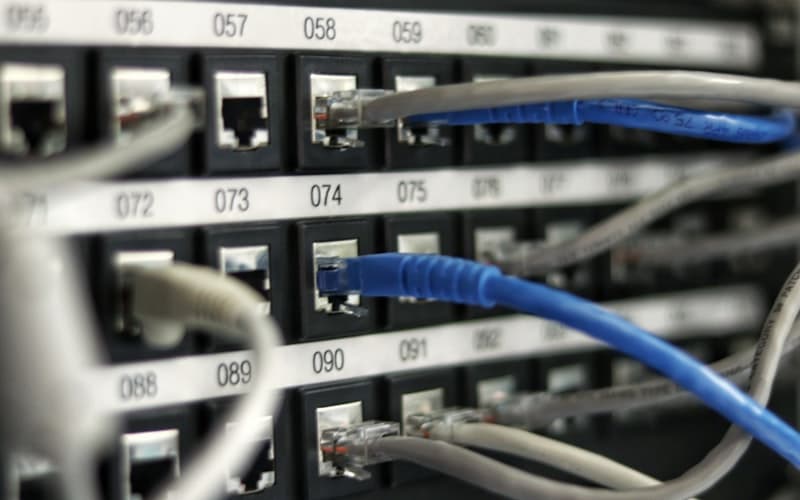
Industrial IoT devices are the hardware foundation of Industry 4.0, connecting factory floors, energy grids, supply chains, and infrastructure systems to digital platforms that enable real-time monitoring, predictive maintenance, and autonomous optimization. Unlike consumer IoT devices designed for convenience, industrial IoT systems must meet stringent requirements for reliability, operating temperature range, electromagnetic compatibility, communication latency, and often functional safety certification. Understanding the types of industrial IoT devices, their capabilities, and real-world applications helps organizations plan effective IIoT deployments that deliver measurable operational improvements. This guide covers the major categories of industrial IoT devices with concrete examples from manufacturing, energy, logistics, and infrastructure.
What Are the Main Categories of Industrial IoT Devices?
Industrial IoT devices can be classified into several functional categories, each serving a distinct role in the IIoT architecture:
- Sensors and transducers: Devices that measure physical parameters like temperature, pressure, vibration, humidity, flow rate, current, voltage, and chemical composition. Examples include RTD temperature probes, piezoelectric vibration sensors, Coriolis flow meters, and gas analyzers.
- Industrial IoT edge gateways: Computing devices that sit between field sensors and cloud platforms, performing protocol translation, local data processing, edge analytics, and secure data transmission. They bridge legacy OT protocols like Modbus and PROFINET to IT protocols like MQTT and HTTPS.
- Smart actuators and controllers: Connected devices that not only receive commands but report their status, health, and performance back to the monitoring platform. Examples include smart valves, variable frequency drives, and servo motors with integrated condition monitoring.
- Programmable logic controllers (PLCs) and edge controllers: Modern PLCs with built-in IoT connectivity that combine traditional automation control with data publishing capabilities, enabling existing production lines to become IIoT-connected without replacing core control infrastructure.
- Machine vision systems: Industrial cameras with embedded AI processors that perform quality inspection, dimensional measurement, barcode reading, and defect detection at production line speeds.
- Asset tracking devices: GPS, UWB, and BLE-based trackers that monitor location, condition, and utilization of mobile industrial assets like forklifts, tools, containers, and vehicles.
What Are Examples of Industrial IoT Sensors?
Industrial IoT sensors are the data collection layer of any IIoT system, and their selection directly impacts the quality and value of the insights generated. Vibration sensors, such as the ADXL345 or industrial-grade units from PCB Piezotronics, are mounted on rotating machinery like motors, pumps, and compressors to detect bearing wear, misalignment, and imbalance. They sample at 1 to 25 kHz and transmit FFT spectral data to edge gateways for predictive maintenance analysis. Temperature sensors using PT100 RTD probes or industrial thermocouples monitor process temperatures in manufacturing, food processing, and pharmaceutical production with accuracy to 0.1 degrees Celsius. Current sensors using split-core CTs or Hall effect sensors monitor motor current signatures to detect overload, phase imbalance, and winding degradation without interrupting the power circuit. Pressure transducers using piezoresistive or capacitive sensing elements monitor hydraulic systems, compressed air networks, and process vessels. Acoustic emission sensors detect ultrasonic frequencies generated by crack propagation, leak formation, and partial discharge in electrical equipment, enabling detection of failures weeks before they become visible.
What Is an Industrial IoT Edge Gateway?
An industrial IoT edge gateway is arguably the most critical device in an IIoT deployment because it serves as the bridge between operational technology and information technology. Edge gateways perform several essential functions: protocol translation between industrial protocols like Modbus RTU/TCP, OPC UA, PROFINET, EtherNet/IP, and BACnet to cloud-friendly protocols like MQTT, AMQP, and HTTPS; local data preprocessing including filtering, aggregation, normalization, and compression to reduce bandwidth consumption by 80 to 95 percent; edge computing for time-sensitive analytics that cannot tolerate cloud round-trip latency, such as anomaly detection alerts that must trigger within 100 milliseconds; store-and-forward buffering that caches data locally during network outages and synchronizes when connectivity is restored; and security enforcement including TLS encryption, certificate-based authentication, and network segmentation between OT and IT domains. Popular industrial IoT edge gateway platforms include devices based on ARM Cortex-A processors running embedded Linux, such as gateways from companies like Advantech, Moxa, and Dell, as well as custom solutions built on compute modules like Raspberry Pi CM4 or NVIDIA Jetson for applications requiring GPU-accelerated edge AI.
How Are Industrial IoT Devices Used in Manufacturing?
Manufacturing is the sector with the highest adoption of industrial IoT systems, driven by the direct link between equipment visibility and production efficiency. In a typical smart factory deployment, vibration and temperature sensors are mounted on every critical motor, pump, and gearbox, feeding data to edge gateways that run predictive maintenance algorithms. The system detects developing faults three to six weeks before failure, enabling maintenance to be scheduled during planned downtime rather than reacting to catastrophic breakdowns. Energy monitoring IoT devices track power consumption per machine and per production line, identifying inefficient equipment and optimizing production scheduling to reduce peak demand charges. Quality inspection systems using machine vision cameras with embedded AI processors inspect products at line speed, detecting surface defects, dimensional deviations, and assembly errors with accuracy exceeding 99.5 percent. Production tracking IoT devices, typically RFID readers and BLE beacons, monitor work-in-progress as it moves through production stages, providing real-time visibility into throughput, cycle times, and bottlenecks.
What Role Do Industrial IoT Devices Play in Energy and Utilities?
The energy sector uses industrial IoT systems extensively for grid monitoring, renewable energy optimization, and predictive maintenance of critical infrastructure. Smart grid sensors monitor voltage, current, power factor, and harmonic content at substations and along distribution lines, enabling real-time visibility into grid health and automated fault location. For solar farms, IoT devices monitor panel-level power output, inverter performance, and environmental conditions like irradiance and temperature, with edge analytics identifying underperforming panels due to soiling, shading, or degradation. Wind turbines are among the most heavily instrumented industrial assets, with each turbine containing 200 to 300 sensors monitoring blade pitch, nacelle vibration, generator temperature, gearbox oil condition, and wind speed and direction. Edge gateways mounted in the nacelle run local ML models for anomaly detection while transmitting summarized data to centralized SCADA systems. Water utilities deploy flow sensors, pressure transducers, and water quality monitors (measuring pH, turbidity, chlorine, and conductivity) throughout distribution networks to detect leaks, contamination events, and pressure anomalies in real time.
How Do Industrial IoT Devices Improve Logistics and Supply Chain?
Logistics and supply chain operations benefit from industrial IoT devices that provide end-to-end visibility from warehouse to delivery. GPS-equipped fleet tracking devices with embedded cellular modems report vehicle location, speed, fuel consumption, and driver behavior in real time, enabling route optimization and compliance monitoring. Cold chain monitoring devices combining temperature, humidity, and door-open sensors with LoRaWAN or NB-IoT connectivity ensure pharmaceutical, food, and chemical shipments maintain required conditions throughout transit, with automatic alerts when thresholds are breached. Warehouse IoT systems use a combination of UWB anchors for centimeter-accurate indoor positioning, BLE beacons for zone-level tracking, and RFID readers for automated inventory counts, eliminating manual cycle counts and reducing pick errors. Container-level IoT devices track intermodal shipping containers across ocean, rail, and road transport, monitoring location, shock and tilt events, humidity, and tamper detection with satellite or cellular connectivity that works worldwide.
What Should You Consider When Selecting Industrial IoT Devices?
Selecting the right industrial IoT devices requires evaluating several critical factors beyond just sensor accuracy. Environmental ratings must match deployment conditions: IP67 or IP69K ingress protection for washdown environments, ATEX or IECEx certification for explosive atmospheres, and extended temperature ratings of minus 40 to plus 85 degrees Celsius for outdoor installations. Communication protocol compatibility must align with existing infrastructure: Modbus for legacy systems, OPC UA for modern automation platforms, and MQTT or AMQP for cloud connectivity. Power source availability determines whether devices can be mains-powered or must operate on batteries or energy harvesting for years without maintenance. Security capabilities including hardware-based secure elements, encrypted communication, secure boot, and firmware update mechanisms are essential for devices connected to critical infrastructure. Interoperability and vendor independence reduce long-term risk; prefer devices that support open standards over proprietary protocols. Finally, total cost of ownership over the device lifecycle, including hardware, installation, connectivity, cloud services, maintenance, and eventual replacement, should guide selection rather than initial purchase price alone. EmbedCrest helps clients navigate these considerations through our industrial IoT consulting services, ensuring device selection aligns with both technical requirements and business objectives.
What Are Emerging Trends in Industrial IoT Devices?
Several trends are shaping the next generation of industrial IoT devices. Edge AI is moving inference directly onto sensor nodes and gateways, enabling real-time anomaly detection without cloud connectivity. Energy harvesting from vibration, thermal gradients, and ambient RF is eliminating batteries in some sensor applications, dramatically reducing maintenance costs for large-scale deployments. Digital twin integration, where each physical device has a continuously updated virtual counterpart, enables simulation-based optimization and what-if analysis. 5G and private LTE networks are providing industrial-grade wireless connectivity with the low latency and high reliability that Wi-Fi cannot guarantee in challenging RF environments. Time-sensitive networking, an extension of Ethernet that provides deterministic, microsecond-precise data delivery, is enabling IIoT devices to participate in real-time control loops previously limited to fieldbus protocols. These trends collectively point toward a future where industrial IoT devices are smarter, more autonomous, and more deeply integrated into operational decision-making.