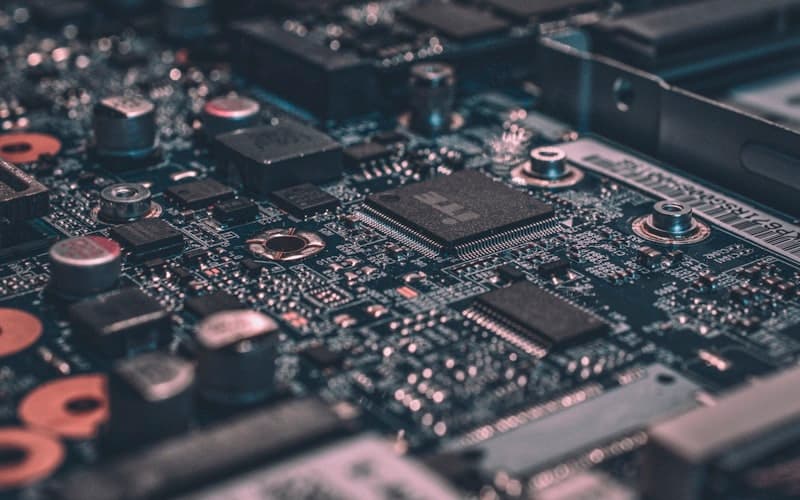
An embedded software engineer is a specialized developer who writes software that runs on embedded hardware, which includes microcontrollers, microprocessors, DSPs, and system-on-chip devices built into products ranging from smart thermostats to autonomous vehicles. Unlike web or mobile developers who work with high-level frameworks on general-purpose operating systems, embedded developers operate at the intersection of hardware and software, writing firmware that directly controls physical peripherals, manages real-time tasks, and must execute reliably within tight resource constraints. The role demands a unique combination of low-level programming proficiency, hardware literacy, and systems thinking that makes embedded software development services increasingly valuable across industries.
What Does an Embedded Software Engineer Do Day to Day?
The daily work of an embedded software engineer varies depending on the project phase but generally includes writing and debugging firmware in C or C++, reviewing schematics and datasheets to understand hardware behavior, configuring microcontroller peripherals like timers, ADCs, SPI buses, and DMA channels, and running tests on both simulation environments and physical hardware. During the design phase, embedded developers participate in architecture reviews, define software-hardware interfaces, and select appropriate RTOS or bare-metal approaches based on system requirements. During development, they implement device drivers, communication protocol stacks, and application logic while continuously testing on target hardware using JTAG debuggers and oscilloscopes. In the validation phase, they perform integration testing, power consumption profiling, and often support hardware-in-the-loop testing. A typical day might involve debugging a race condition in an interrupt service routine in the morning, reviewing a colleague's SPI driver implementation before lunch, and writing unit tests for a sensor data processing module in the afternoon.
What Technical Skills Are Essential for Embedded Developers?
Successful embedded developers build expertise across multiple technical domains:
- C and C++ mastery: These are non-negotiable for embedded work. Engineers must understand pointers, memory management, bit manipulation, volatile qualifiers, linker scripts, and compiler optimizations specific to embedded targets.
- RTOS expertise: Knowledge of FreeRTOS, Zephyr, ThreadX, or QNX including task creation, scheduling priorities, mutexes, semaphores, message queues, and deadlock avoidance strategies.
- Peripheral programming: Ability to configure and use GPIO, UART, SPI, I2C, CAN, USB, ADC, DAC, PWM, and timers by reading reference manuals and programming peripheral registers or HAL APIs.
- Debugging skills: Proficiency with JTAG/SWD debuggers like Segger J-Link, logic analyzers, oscilloscopes, and serial protocol decoders. Ability to diagnose stack overflows, memory corruption, and timing issues.
- Communication protocols: Understanding of MQTT, CoAP, HTTP, TCP/IP, BLE, LoRaWAN, and CAN for connected embedded devices.
- Build systems and toolchains: Experience with GCC ARM toolchain, CMake, Make, and IDE-specific build configurations. Knowledge of linker scripts and memory map optimization.
- Version control and testing: Git workflows, unit testing with frameworks like Unity or CppUTest, and static analysis tools such as PC-lint or Cppcheck.
What Is the Difference Between an Embedded Software Engineer and a Firmware Engineer?
The terms are often used interchangeably, but there is a subtle distinction. A firmware engineer typically works on the lowest-level software that directly initializes and controls hardware: bootloaders, device drivers, HAL implementations, and bare-metal or RTOS-based system software. An embedded software engineer may work at a slightly higher level, implementing application logic, communication stacks, and user interfaces that run on top of the firmware layer. In practice, most embedded developers handle both levels, especially in small to mid-sized teams. At larger organizations, the roles may be more clearly separated, with firmware engineers owning the BSP (board support package) and hardware abstraction layers while embedded software engineers build the application and middleware layers. Regardless of title, both roles require deep hardware awareness and the ability to read schematics and datasheets.
What Career Path Can Embedded Developers Expect?
The career trajectory for embedded developers typically progresses through several stages. Entry-level embedded developers with zero to two years of experience focus on implementing well-defined firmware modules, writing test cases, and learning to debug on physical hardware. They typically earn between 4 and 8 LPA in India or 70,000 to 90,000 USD in the United States. Mid-level embedded developers with three to six years own complete subsystems, make technology selection decisions, and mentor juniors. Compensation ranges from 10 to 18 LPA in India or 90,000 to 130,000 USD in the US. Senior embedded developers and architects with seven or more years design complete embedded platforms, define coding standards and architecture guidelines, lead technical discussions with clients, and drive innovation. They earn 20 to 35 LPA in India or 130,000 to 180,000 USD in the US. From the senior level, career paths branch into principal engineer or chief architect roles for those who prefer depth, or engineering management for those who enjoy building and leading teams.
Why Are Embedded Developers in Such High Demand?
The demand for embedded developers has surged due to several converging trends. The IoT explosion has connected billions of previously offline devices, each requiring embedded firmware for sensing, processing, and communication. The automotive industry's shift toward electric vehicles, ADAS, and autonomous driving has created massive demand for embedded software that meets AUTOSAR and ISO 26262 functional safety standards. Edge AI is pushing machine learning inference onto microcontrollers, requiring developers who understand both ML model optimization and embedded constraints. The medical device industry is incorporating more connected, intelligent features into devices, from continuous glucose monitors to AI-powered diagnostic equipment. Supply chain diversification has led companies to explore RISC-V as an alternative to ARM, creating demand for engineers who can port and optimize firmware for new architectures. Despite this growing demand, the embedded engineering talent pool remains relatively small because most computer science programs focus on web, mobile, and cloud development rather than hardware-adjacent programming.
How Do Embedded Software Development Services Work?
Organizations that lack in-house embedded expertise or need to scale their development capacity often turn to embedded software development services providers. These firms offer several engagement models: project-based development where the provider delivers a complete embedded solution to specification, staff augmentation where individual embedded developers integrate into the client's team, and dedicated team models where a full embedded engineering unit operates as an extension of the client organization. The best embedded software development services providers bring not just programming skills but domain expertise in specific industries, established processes for hardware-software co-design, and testing infrastructure including oscilloscopes, logic analyzers, protocol analyzers, and HIL test rigs. At EmbedCrest, our embedded software development services span the full lifecycle from requirements analysis and architecture design through firmware implementation, testing, and production support, enabling clients to bring embedded products to market faster while managing risk.
What Soft Skills Matter for Embedded Software Engineers?
Technical skills alone do not make a successful embedded software engineer. Because embedded development sits at the intersection of hardware and software, communication skills are critical for collaborating with hardware engineers, mechanical engineers, and product managers who may not share your technical vocabulary. Documentation skills matter because embedded systems often have 10 to 15 year lifespans, meaning the firmware you write today will be maintained by engineers who have not yet been hired. Problem-solving under ambiguity is essential because embedded bugs often manifest as hardware-software interaction issues where neither the schematic nor the code appears wrong in isolation. Time management and prioritization are important because embedded projects typically face hard deadlines tied to product launch schedules, regulatory submissions, or production line start dates. Finally, continuous learning is non-negotiable in a field where new processor architectures, communication protocols, and development tools emerge constantly.
How to Become an Embedded Software Engineer
For aspiring embedded developers, the most effective path combines formal education with hands-on hardware projects. A degree in electrical engineering, computer engineering, or computer science provides the theoretical foundation in digital logic, computer architecture, signals and systems, and data structures. However, the real learning happens through project work. Start with an Arduino or STM32 Nucleo board and progressively tackle more complex projects: blink an LED, read a sensor over I2C, implement a UART command parser, build a BLE-connected device using an nRF52840 development kit, then deploy a TinyML model for sensor data classification. Contribute to open-source embedded projects on GitHub, particularly Zephyr RTOS or MicroPython, to gain experience with production-quality codebases and collaborative development workflows. Build a portfolio that demonstrates your ability to work with real hardware, not just simulations. Recruiters and hiring managers at embedded engineering firms look for candidates who can show oscilloscope captures alongside code commits, proving they understand how software behavior manifests in the physical world.