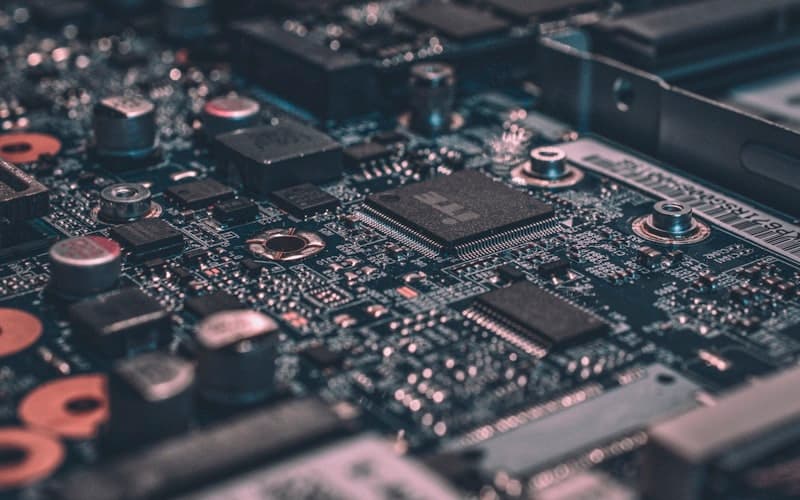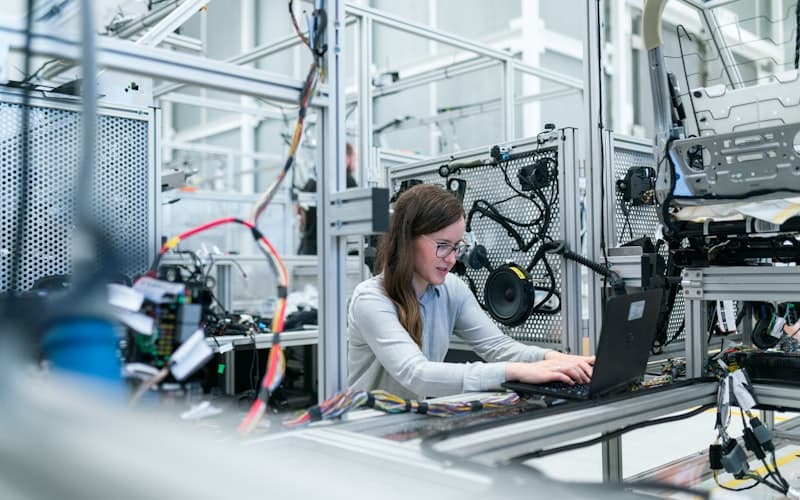
India manufacturing sector is undergoing a fundamental transformation driven by Edge AI and TinyML technologies. With the government Make in India initiative pushing for increased domestic manufacturing output and Industry 4.0 adoption, industrial IoT solutions providers are deploying intelligent edge devices across factory floors from Gujarat to Tamil Nadu. Edge AI development services enable manufacturers to process sensor data locally on microcontrollers and edge processors, extracting actionable insights without the latency, bandwidth costs, and privacy concerns of cloud-only architectures. This article examines real-world applications of Edge AI and TinyML in Indian industrial settings, the technical architectures that make them possible, and how these technologies are delivering measurable ROI for manufacturers of all sizes.
Why Industrial IoT in India Needs Edge Intelligence
Indian manufacturing facilities face unique challenges that make edge processing essential. Many factories are located in areas with unreliable internet connectivity, making cloud-dependent solutions impractical. Production floors generate enormous volumes of vibration, temperature, current, and acoustic data from hundreds of machines simultaneously, and transmitting all of this raw data to the cloud would overwhelm available bandwidth and incur significant costs. Most critically, industrial processes require sub-second response times for critical decisions like shutting down a machine showing signs of bearing failure or rejecting a defective part on an assembly line. An industrial IoT software system that relies on cloud round trips for these decisions simply cannot meet the required latency. Edge AI solves these problems by performing inference directly on the factory floor, using the cloud only for model updates, fleet analytics, and long-term data storage.
Predictive Maintenance: The Highest-ROI Application of Edge AI
Predictive analytics solutions powered by Edge AI represent the single highest-value application of industrial IoT in Indian manufacturing. Traditional time-based maintenance schedules result in either premature component replacement, wasting usable life, or unexpected failures causing costly unplanned downtime. A predictive maintenance edge device continuously monitors vibration signatures, motor current waveforms, and temperature trends, using a lightweight neural network to detect early signs of degradation. For Indian manufacturers, where unplanned downtime can cost between 5 and 50 lakh rupees per hour depending on the production line, the ROI on predictive maintenance systems is typically realized within three to six months of deployment.
A typical predictive maintenance architecture for Indian factories uses triaxial MEMS accelerometers sampling at 12.8 or 25.6 kHz, with FFT-based feature extraction feeding a 1D convolutional neural network running on an ARM Cortex-M7 or a small edge processor like the NVIDIA Jetson Orin Nano. The TinyML model, often under 100 KB in size, classifies bearing condition, shaft alignment, and electrical imbalances. Results are transmitted over Modbus TCP to the existing PLC network and over MQTT to an industrial IoT software dashboard for fleet-wide visibility. A TinyML solutions company specializing in vibration analysis can train these models using as little as two to three months of historical vibration data combined with maintenance logs.
Visual Quality Inspection with Edge AI on the Factory Floor
Computer vision-based quality inspection is the second major application driving Edge AI adoption in Indian manufacturing. Traditional manual inspection is slow, inconsistent, and unable to detect microscopic defects. Cloud-based vision systems introduce latency that slows production lines. Edge AI vision systems using cameras connected to NVIDIA Jetson modules or specialized vision processors can perform real-time defect detection at full production line speed. In textile manufacturing hubs in Gujarat and Tamil Nadu, Edge AI vision systems inspect fabric for weaving defects at speeds exceeding 20 meters per minute. In automotive component manufacturing in Pune, these systems verify machining tolerances and surface finishes on thousands of parts per shift. The inference latency of under 30 milliseconds per frame means the inspection system can trigger pneumatic reject mechanisms without slowing the production line.
Energy Optimization Through Industrial IoT and Edge Analytics
Energy costs represent 15 to 30 percent of operating expenses for most Indian manufacturing facilities. Edge AI-powered energy monitoring systems use current transformers and power quality analyzers connected to edge processors to identify energy waste patterns that human operators miss. These systems detect compressed air leaks through ultrasonic signature analysis, identify motors running at suboptimal loads through current waveform analysis, and optimize HVAC scheduling based on occupancy and production schedule patterns. An industrial IoT solutions provider deploying energy optimization edge devices across a mid-size Indian factory typically identifies energy savings of 12 to 25 percent within the first quarter of operation, translating to annual savings of 15 to 40 lakh rupees.
TinyML Solutions Architecture for Resource-Constrained Industrial Environments
TinyML is particularly well-suited for industrial IoT deployments in India because it enables AI inference on low-cost, low-power microcontrollers rather than expensive edge servers. A TinyML-based vibration monitoring node can be built around an STM32L4 Cortex-M4 MCU costing under 5 USD, with total bill-of-materials under 25 USD including the MEMS accelerometer, power management, and LoRaWAN radio. This price point makes it economically feasible to instrument every motor and rotating machine in a factory, rather than sampling only the most critical equipment. The TinyML model runs entirely on the MCU, with the device sleeping at under 2 microamps between sampling intervals and consuming under 5 milliwatts during active inference. Battery life of 12 to 18 months eliminates the need for wired power, dramatically simplifying installation.
Edge AI Development Services: What to Expect from a Provider
When engaging an Edge AI development services provider for industrial IoT, expect the engagement to span four distinct phases. The data assessment phase involves analyzing your existing sensor data, maintenance logs, and production records to determine the feasibility of AI-based solutions and identify the highest-impact use cases. The model development phase includes data collection if needed, feature engineering, model architecture selection, training, quantization, and optimization for the target hardware. The embedded integration phase covers firmware development on the target MCU or edge processor, sensor interface driver development, communication stack integration, and over-the-air update capability. The deployment and refinement phase involves pilot installation, model validation against real-world conditions, accuracy tuning with production data, and scale-out planning. A competent TinyML solutions company will provide transparent accuracy metrics throughout this process, including confusion matrices, precision-recall curves, and latency benchmarks on the actual target hardware.
Challenges and Practical Considerations for Indian Deployments
Industrial Edge AI deployments in India face several practical challenges:
- Environmental extremes: Factory floors in India can reach 45 to 50 degrees Celsius during summer months, requiring industrial-grade components rated for extended temperature ranges and proper thermal management in enclosure design.
- Power quality issues: Voltage fluctuations and power outages are common in many industrial areas. Edge devices need robust power supply design with wide input voltage tolerance and graceful shutdown capabilities to prevent data corruption.
- Legacy equipment integration: Many Indian factories operate machines that are 15 to 30 years old with no digital interfaces. Non-invasive sensor attachment using clamp-on current transformers and externally mounted accelerometers is essential for retrofit deployments.
- Workforce training: Predictive analytics solutions are only effective if maintenance teams understand how to interpret alerts and act on predictions. Any deployment should include comprehensive training for plant operators and maintenance personnel.
- Connectivity infrastructure: While Ethernet and Wi-Fi may be available in newer facilities, older factories often lack network infrastructure. LoRaWAN and industrial cellular including LTE-M provide connectivity without requiring factory-wide networking upgrades.
The Road Ahead: Edge AI and Industry 4.0 in India
The convergence of affordable edge hardware, mature TinyML frameworks, and India growing emphasis on manufacturing competitiveness is creating unprecedented opportunities for industrial IoT solutions providers. The Production Linked Incentive scheme for electronics manufacturing, combined with increasing labor costs, is accelerating automation and smart manufacturing adoption across the country. Edge AI and TinyML are not just technologies for large enterprises with massive budgets. With sensor nodes costing under 25 USD and edge processors under 200 USD, even small and medium manufacturers can deploy predictive analytics solutions that deliver meaningful ROI. The key is partnering with an industrial IoT solutions provider that understands both the technical challenges of edge deployment and the practical realities of Indian manufacturing environments. Companies that adopt Edge AI today will build a significant competitive advantage as India manufacturing sector continues its trajectory toward Industry 4.0.